
Blogs
Key Benefits of the MPRP vs. Other EU Golden Visa Programs

The Malta Permanent Residence Programme (MPRP) is widely recognized as Malta’s version of a “Golden Visa,” offering non-EU nationals a straightforward path to settling in Europe. At its core, the program allows investors and their families to obtain permanent residency status in an English-speaking European Union member state through a specific financial contribution and property investment. Unlike some visas that require constant renewals based on employment, the MPRP provides a certificate of permanent residence from the very beginning, giving families long-term security and a foothold in the Mediterranean.
Across the continent, EU Golden Visa programs in countries like Greece, Portugal, and Spain have long been popular routes for global investors seeking mobility and safety. Generally, these programs require you to buy real estate or transfer capital in exchange for residency rights. However, the landscape is shifting rapidly, with many countries increasing their minimum investment thresholds or removing real estate options entirely. In this changing environment, comparing the key benefits of the MPRP against these other EU options reveals distinct advantages, particularly regarding cost structures and processing speeds.
How the MPRP Works in 2025: Structure, Investment, and Process
To qualify for the MPRP, the main applicant must be a non-EU/EEA/Swiss national with a clean criminal record and sufficient financial resources. You are allowed to include your spouse, children, and even parents or grandparents in a single application, making it a truly multi-generational solution. Financially, you must demonstrate that you have capital assets of at least €500,000, of which €150,000 must be liquid financial assets like stocks or savings, ensuring you can support your family without relying on the Maltese state.
The program has seen significant updates for 2025 designed to streamline costs and improve accessibility. The government contribution is now a unified €37,000, regardless of whether you choose to rent or buy a property. Additionally, there is an administration fee of €60,000, which is paid in stages to manage cash flow better. A major improvement for families is the reduction in fees for adult dependants; the cost is now just €7,500 per additional adult dependant (excluding the spouse), which is significantly lower than previous iterations of the scheme.
The application process is structured to be efficient and transparent. It begins with the submission of your application via a licensed agent, followed by rigorous due diligence checks performed by the Maltese agency. One unique feature is that once initial checks are passed, a one-year temporary residence permit can be issued, allowing the family to move to Malta while the final details are sorted. After approval, you select your qualifying property and pay the final contributions, resulting in the issuance of the permanent residence certificate and card.
Core Benefits of the MPRP: What You Actually Get
The primary benefit of the MPRP is the granting of permanent residence rights from day one. Unlike other programs that start with temporary permits requiring multiple renewals over several years, successful MPRP applicants receive a certificate that is valid indefinitely. The actual residence card is renewed every five years, similar to a standard passport renewal, but the status itself does not expire as long as the program conditions are met, providing immense peace of mind for families planning their long-term future.
Another significant advantage is the mobility it grants within the Schengen Area. Holders of the Maltese residency card can travel visa-free to 29 European countries for up to 90 days within any 180-day period. This is particularly valuable for business people and travelers who want to avoid the hassle of applying for tourist visas. Furthermore, residents will be exempt from the upcoming ETIAS requirements and the Entry/Exit System (EES) checks, ensuring smoother and faster border crossings compared to non-resident tourists.
Beyond the paperwork, the lifestyle and practical benefits of Malta are compelling. The country is known for its high safety standards, political stability, and a robust economy. Crucially, English is one of the two official languages, which removes the language barrier often found in other EU countries like Spain or France. Families gain access to high-quality healthcare and an education system based on the British curriculum, making Malta a comfortable and practical “safe haven” for raising children or retiring.
Financial Advantages: Total Cost of MPRP vs. Other EU Golden Visas
The financial structure of the MPRP has been simplified in 2025 to offer better value, particularly for families. The new unified government contribution of €37,000 and the fixed administration fee of €60,000 provide clarity on costs upfront. Perhaps the most aggressive change is the removal of additional contribution fees for the spouse and minor children, along with the reduced fee for adult children and parents. This flat-fee approach contrasts sharply with other programs that often charge high per-person fees that can balloon the total cost.
“A reduction in the minimum investment amount from 152,000 to 113,000 EUR.” -Reach Immigration
When looking at property thresholds, the MPRP remains highly competitive compared to its Mediterranean neighbors. You can qualify by leasing a property for as little as €10,000 to €12,000 per year (depending on the location) or purchasing a property starting at €300,000 in the South of Malta or Gozo. In contrast, Greece has recently raised its minimum real estate investment to €400,000 or even €800,000 in popular areas, and Spain typically requires a €500,000 real estate purchase, making Malta’s entry point significantly more affordable.
The “family cost” advantage becomes even clearer when you calculate the total outlay for a family of four or more. Because Malta has eliminated extra government contributions for the spouse and minors, the incremental cost of adding family members is negligible compared to Portugal or Cyprus, where application and processing fees apply to every individual. This makes the MPRP one of the most cost-efficient options for large families looking to relocate together.
In summary, the revised fee structure positions the MPRP as a leader in cost-effectiveness. By offering a rental option that avoids locking up huge amounts of capital in real estate, combined with low family fees, Malta allows investors to retain more liquidity. This financial flexibility is a key differentiator against rival EU residency-by-investment options that are becoming increasingly expensive.
Speed, Flexibility, and Process Benefits Unique to the MPRP
One of the standout features of the updated MPRP is the introduction of a one-year temporary residence permit issued early in the process. Once the main applicant passes the initial background checks, this permit allows the entire family to relocate to Malta immediately. This eliminates the frustrating “limbo” period found in other programs, where you might have to wait in your home country for months or years before being allowed to settle in your new home.
This early relocation capability contrasts sharply with typical procedures in other EU Golden Visa programs. In countries like Portugal or Spain, residence rights usually only commence after the investment is fully completed and the bureaucratic approval process is finalized. This can often lead to significant delays, making it difficult to plan school years or business moves. Malta’s approach acknowledges that investors often have urgent needs to relocate.
Furthermore, this process offers immense procedural flexibility. By arriving in Malta on the temporary permit, you have the luxury of time to physically inspect properties and choose the right home, rather than being forced to buy off-plan or online to meet a deadline. You can settle your children into schools, open bank accounts, and handle logistics before the final permanent residence certificate is even issued, ensuring a smooth transition for the whole household.
“Option to apply for a temporary Maltese residence permit valid for one year at the start of the application process, meaning that applicants can get a residence permit within a month or so of kicking the process off.” -PwC
Property Options and Investment Flexibility in the MPRP
The MPRP offers two distinct routes for the property requirement: purchasing or leasing. To buy, the minimum value is €300,000 in the South of Malta and Gozo, or €350,000 in the rest of Malta. Alternatively, you can lease a property for a minimum of €10,000 per year in the South/Gozo or €12,000 elsewhere. This variety allows investors to choose a path that fits their financial strategy, whether they want asset appreciation through ownership or capital preservation through renting.
New flexibility rules introduced in 2025 have added a layer of financial incentive previously unavailable. Property purchasers are now allowed to lease their qualifying property to third parties immediately, generating rental income to offset costs. Even those who choose the rental route can sublet their property after five years, provided they have the landlord’s consent. This potential for return on investment makes the property requirement feel less like a sunk cost and more like a business decision.
Comparing this to other EU Golden Visa programs reveals a distinct advantage for Malta. Many other schemes strictly forbid renting out the qualifying property or require it to be used solely for the applicant’s residence. By allowing investors to monetize their real estate assets, Malta aligns the program with the practical reality of global investors who may not reside in the property 365 days a year.
Family Reunification and Long-Term Security
Family reunification is a cornerstone of the MPRP, allowing for a comprehensive inclusion of dependants that few other programs can match. A single application can include the main applicant, their spouse, minor children, unmarried and non-economically active adult children, and even dependent parents and grandparents of both spouses. This broad definition facilitates multi-generational planning, ensuring that no vulnerable family member is left behind in the home country.
The security offered by the MPRP is rooted in its status as a permanent residence program. Unlike temporary residence permits in other EU states that might depend on maintaining a business or specific economic activity, the MPRP status is valid for life, provided the program’s monitoring requirements are met for the first five years. The residence cards are simply renewed every five years, providing a stable, long-term legal status that protects the family’s future.
When it comes to family friendliness, the cost structure plays a huge role. The elimination of fees for spouses and minors means that large families are not penalized financially. In comparison, many other Golden Visa destinations charge significant per-head government fees, which can make the total cost prohibitive for families with three or more children or dependent grandparents. Malta’s flat-fee approach makes it a superior choice for larger households.
“Immediate Leasing for Property Purchasers: Applicants who purchase a qualifying property may now lease it out to third parties for temporary periods during which they are not present in Malta.” -Andersen
Tax, Lifestyle, and Quality-of-Life Considerations
Malta offers a highly attractive tax environment for residents, which is often a primary driver for high-net-worth individuals. While the MPRP itself is a residency program and not a tax program, becoming a tax resident in Malta can open doors to the “remittance basis” of taxation, where foreign income is only taxed if remitted to Malta. Navigating these benefits requires expert guidance, and firms like Acumum specialize in helping clients structure their affairs to maximize these advantages within the legal framework.
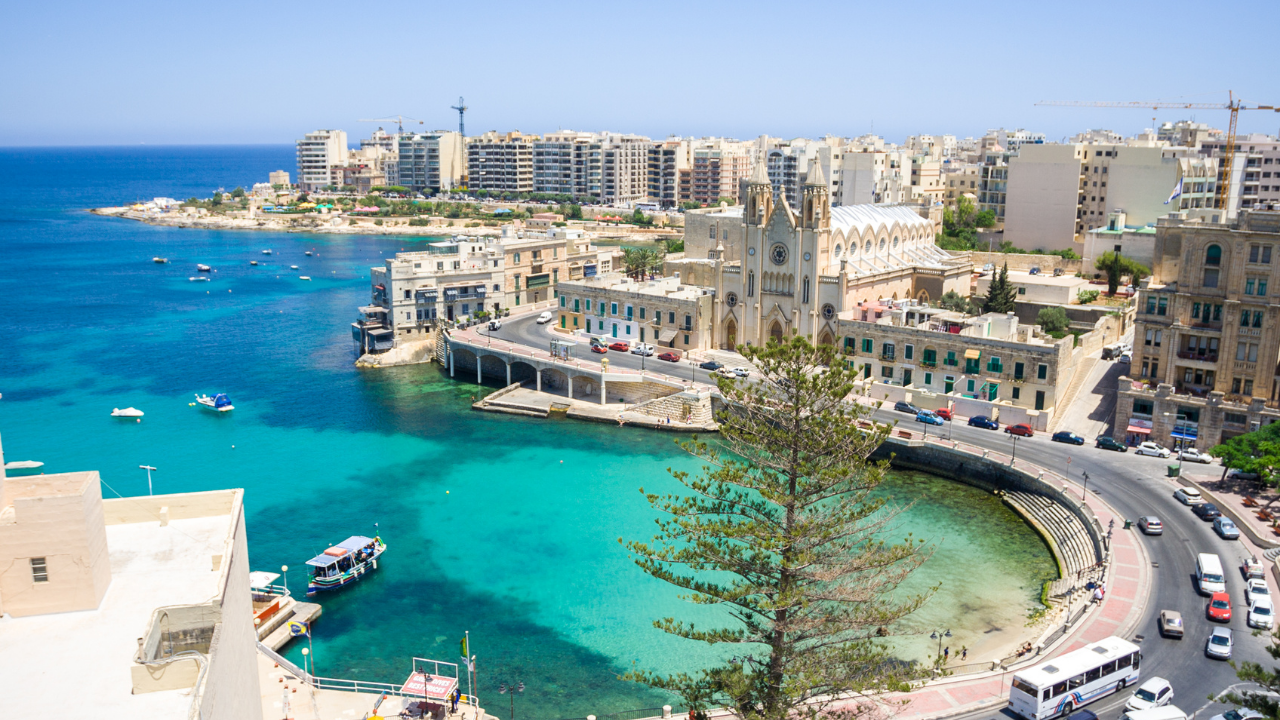
The lifestyle benefits of living in Malta are equally compelling. The island enjoys a warm Mediterranean climate with over 300 days of sunshine a year, which significantly boosts quality of life. As a former British colony, English is widely spoken and is the language of business and legislation, making integration seamless. The country also boasts a very low crime rate and a stable political environment, offering a secure backdrop for both wealth and family.
Comparing these “soft factors” to other EU hubs highlights Malta’s unique position. While countries like Italy or France offer rich cultures, they often come with significant language barriers and complex bureaucracies that can be frustrating for expats. Malta combines the charm of Southern Europe with an Anglo-Saxon administrative style, offering high standards of healthcare and education that rival the best in Europe, enhancing the overall value of the residency.
Comparing the MPRP to Key EU Golden Visa Competitors
When evaluating the MPRP against competitors, it is helpful to look at a framework of cost, speed, and residency requirements. Popular programs in Greece, Portugal, and Spain have historically been the main rivals. However, Portugal has removed its real estate investment option for residency, and Greece has drastically increased its investment thresholds. Hungary and Italy offer alternatives, but often with different investment risks or bureaucratic hurdles. Malta stands out for its stability and the clarity of its requirements.
Against Greece and Portugal, the MPRP wins on investment flexibility and entry price. While Greece now requires up to €800,000 for real estate in prime locations, Malta allows you to qualify by renting a property for just €10,000 to €12,000 a year. Additionally, Malta does not have a physical stay requirement to maintain the permanent residence status, whereas Portugal requires a minimum stay of seven days per year, and other nations may require more substantial physical presence.
Compared to programs in Cyprus or Italy, Malta offers a lower overall investment burden. Cyprus requires a minimum investment of €300,000 plus VAT, and the path to citizenship there is not directly linked to the residency. Italy’s “La Dolce Vita” visa requires a significant passive income or a high investment in government bonds or startups. Malta’s MPRP is generally faster to process, and the ability to rent rather than buy lowers the initial capital risk significantly compared to these high-ticket options.
“The 2025 MPRP amendments position Malta as one of Europe’s most attractive and accessible long-term residence destinations. With lower costs for families, greater flexibility in property use, and the ability to relocate immediately under temporary residency.” -Andersen
Ultimately, the MPRP stands out most clearly for families seeking a cost-effective, secure “Plan B” or a new primary home without breaking the bank. While it does not offer the direct path to citizenship that Portugal theoretically offers after five years, it provides immediate permanent residence and superior property flexibility. For investors who prioritize immediate security and lower capital outlay, Malta is often the preferable choice.
Risks, Limitations, and Regulatory Considerations
It is important to manage expectations regarding citizenship. The MPRP is a permanent residence program, not a citizenship-by-investment scheme. While long-term residents can theoretically apply for naturalization, the process in Malta is discretionary and not automatic. Investors looking for a guaranteed passport in a short timeframe should be aware that the MPRP is designed for residency, and any path to citizenship would be governed by separate, stringent laws.
Regulatory risk is another factor to consider in the world of investment migration. The European Union has been increasing scrutiny on Golden Visa programs, leading to closures or tightening of rules in countries like Ireland and Portugal. Malta has proactively adapted its programs to ensure robust due diligence and compliance with EU standards. This shift towards a highly regulated environment actually protects investors, as it ensures the long-term viability and reputation of the residence status they are acquiring.
Compliance is key to maintaining your status. Beneficiaries must adhere to program obligations, such as retaining a qualifying property (either rented or owned) for the first five years and maintaining health insurance. Unlike some programs where you can “invest and forget,” the MPRP requires you to stay informed and compliant. However, these obligations are generally less burdensome than the physical presence requirements found in other EU Golden Visa regimes.

Is the MPRP Right for You? Key Profiles That Benefit Most
The MPRP is ideally best suited for families who are looking for a safe, English-speaking base in Europe with high-quality education and healthcare. If your goal is to provide your children with a European upbringing or to secure a “safe haven” residence that doesn’t require you to live there 365 days a year, this program is a perfect fit. The reduced costs for dependants make it specifically attractive for larger families who would be priced out of other EU schemes.
Internationally mobile entrepreneurs and retirees also fit the profile well. The ability to travel visa-free within the Schengen Area is a massive benefit for business and leisure. Furthermore, the option to rent a property rather than buy allows entrepreneurs to keep their capital liquid for other investments. The new temporary residence permit allows retirees to move quickly and start enjoying their Mediterranean retirement without waiting for years of bureaucratic processing.
In contrast, the MPRP might not be the right fit for investors whose sole priority is obtaining a second passport as quickly as possible. Those individuals might be better served by specific citizenship-by-investment programs, though these are becoming rarer and more expensive in Europe. Similarly, if you have no intention of ever visiting Malta or maintaining a link to the country, the compliance requirements might feel unnecessary compared to purely transactional programs elsewhere.
Practical Steps: From Evaluating Options to Submitting an MPRP Application
The first step in your journey is to clearly define your objectives. Are you seeking visa-free travel, a tax-efficient residence, or a family safety net? Once your goals are clear, compare the MPRP against other EU Golden Visa options by looking at the total cost over five years, not just the initial investment. Consider the “hidden” costs of other programs, such as legal fees, renewal costs, and mandatory travel, to get a true comparison.
Once you decide on Malta, you must engage a licensed agent, as applications cannot be submitted directly by the investor. This is where selecting a reputable firm is critical. You will need to gather documentation for due diligence, including proof of assets and clean criminal records. Experienced advisors, such as those at Acumum, can guide you through the intricacies of the application, ensuring your file is complete and compliant, which significantly speeds up the approval process.
Finally, plan your timeline. While the due diligence process takes several months, remember that you can apply for the temporary residence permit early on. This means you should practically prepare for relocation—looking at schools, flights, and temporary accommodation—much sooner than you would for other visas. By leveraging this unique feature, you can start your new life in Europe while the paperwork is finalized in the background.
FAQs on the Key Benefits of the MPRP vs. Other EU Golden Visa Programs
Is the MPRP cheaper than other EU Golden Visa programs for families?
Yes, for most families, the MPRP is significantly more cost-effective. The 2025 updates introduced a unified government contribution and removed the additional contribution fees for spouses and minor children. When you combine this with the option to rent a property rather than buy, the total capital outlay is often much lower than the €500,000+ real estate requirements seen in Spain or the new higher thresholds in Greece.
Does the MPRP lead to EU citizenship like other Golden Visas?
The MPRP grants permanent residence, not automatic citizenship. While it allows you to live in Malta indefinitely, it does not provide a direct or guaranteed path to a passport. Malta has a separate, distinct route for citizenship by naturalisation for exceptional services, but simply holding an MPRP card does not entitle you to citizenship after a set number of years in the same way some residency tracks in Portugal or Spain might imply.
How fast can I relocate to Europe under the MPRP compared to other programs?
You can relocate much faster under the MPRP thanks to the new provision for a one-year temporary residence permit. This permit is issued after initial checks are passed, allowing you and your family to move to Malta and settle in while the final permanent residence application is being processed. This is a distinct advantage over many other EU programs that require full approval and investment completion before granting any residence rights.
What are the main advantages of Malta’s location and lifestyle versus other EU Golden Visa countries?
Malta’s primary advantages are its use of English as an official language, its high safety levels, and its British-influenced legal and education systems. This makes integration much easier for international investors compared to countries where language barriers exist. Additionally, Malta offers a stable political and financial environment, serving as a secure base within the Mediterranean, distinct from the economic volatility sometimes seen in other Southern European nations.
Can I earn rental income from my qualifying property under the MPRP?
Yes, under the new 2025 rules, investors who purchase a qualifying property can rent it out immediately to third parties to generate income. Even those who choose the leasing route for their application can sublet the property after five years with the landlord’s consent. This flexibility to monetize the investment is rare among EU Golden Visa programs, which often restrict the usage of the qualifying property to personal residence only.
Conclusion: Key Takeaways and Next Steps for Comparing the MPRP with Other EU Golden Visas
The Malta Permanent Residence Programme stands out in the crowded EU investment migration market by offering a unique blend of stability, affordability, and flexibility. Its core advantages—permanent residence from day one, English-speaking environment, Schengen mobility, and a cost structure that is incredibly friendly to families—make it a superior choice for many investors. The ability to relocate early using a temporary permit and the option to generate rental income from your property further differentiate the MPRP from stricter, more expensive regimes in Greece or Spain. As Europe’s Golden Visa landscape tightens, Malta’s program remains a robust, transparent, and high-value pathway to Europe.
If you are actively researching “Key Benefits of the MPRP vs. Other EU Golden Visa Programs,” your next step should be to map out your specific family goals and budget. Use the points discussed in this article as a checklist to benchmark Malta against other potential destinations. To ensure you make the most informed decision and navigate the legal requirements smoothly, consult with qualified professionals who can model the exact costs and timelines for your situation. Taking expert advice now will help you decide if the MPRP offers the security and lifestyle upgrade your family deserves.